


Advantages
Modern anesthesia
Modern anesthesia in dentistry makes dental treatment and tooth extraction completely painless, comfortable, and safe for patients of all ages. Each type of dental procedure requires an appropriate form of anesthesia – local, general, or a combination of both. For example, during professional teeth cleaning, a local anesthetic in the form of a gel or spray is applied to the gums for surface anesthesia, while maxillofacial surgery is performed under general anesthesia.

Sirius-Dent Medical Center in Odesa is equipped with a Dräger Primus anesthesia workstation, which ensures safe anesthesia during dental procedures of any scope and complexity. This expert-class system provides safe mechanical ventilation and real-time monitoring of all vital parameters, including anesthesia depth, blood pressure, oxygen consumption, electrocardiogram, and others.
Thanks to the modern equipment at our medical center, a team of experienced and highly qualified anesthesiologists, and the use of certified anesthetic medications, our patients can be confident in the comfort and safety of any dental procedure. Sirius-Dent Medical Center performs a full range of dental surgical procedures. We also have a pediatric anesthesiologist.
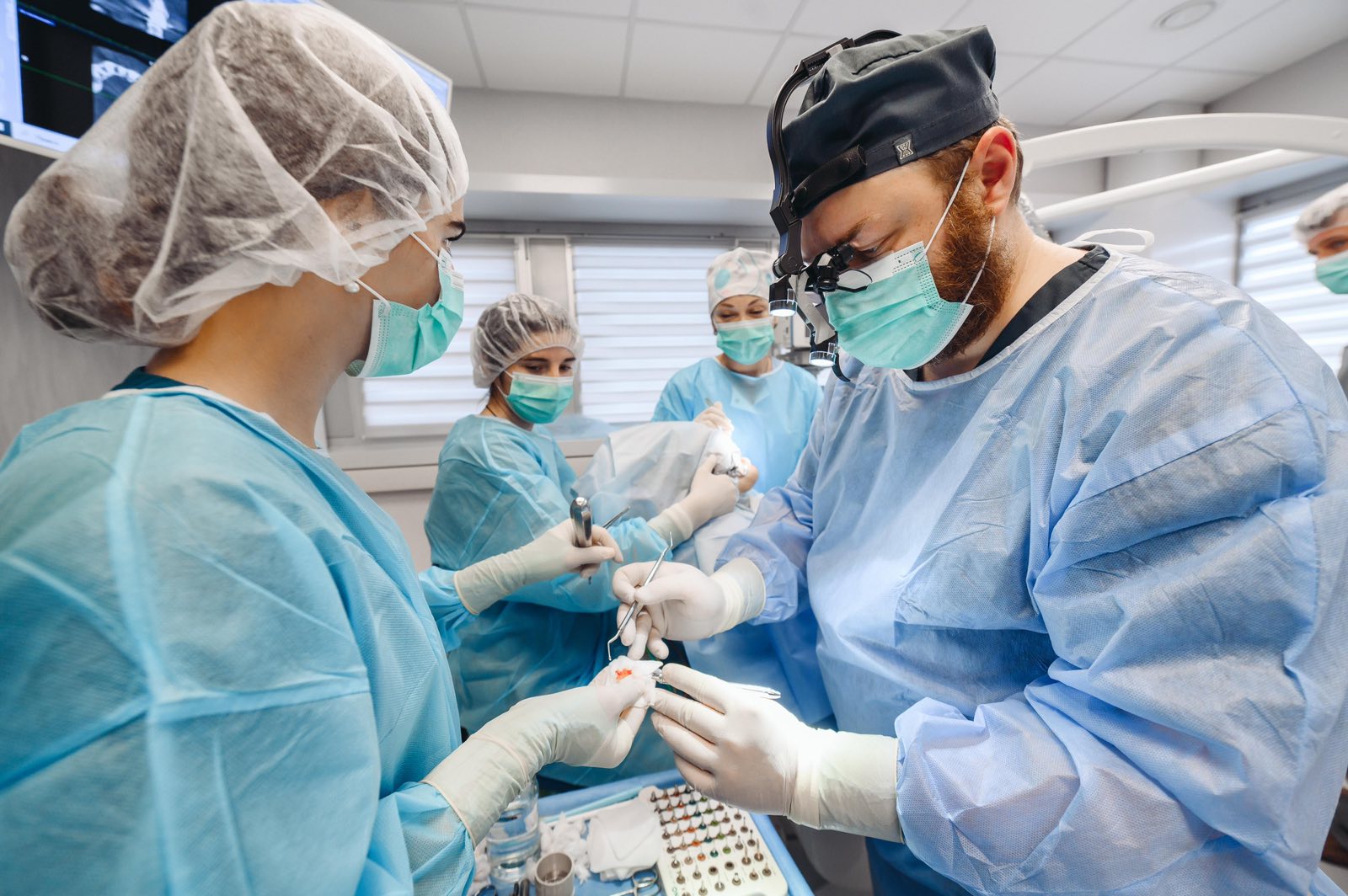


The best of the best of the best anesthesiologists.
Anesthesia you don't need to fear. Book a consultation by calling +38 (066) 125-86-31 or by filling out the form on the website.

what is worth knowing
Indications and contraindications for the use of anesthesia in dentistry
Anesthesia in dentistry is administered before any procedure: dental treatment, tooth extraction, prosthetic treatment or dental implantation, professional dental and oral hygiene, bone grafting, and other surgical procedures. Thanks to the use of modern anesthetics and their combinations, which reduce the toxic effects of medications on the body, Sirius-Dent Medical Center performs all types of dental procedures without age restrictions.
We also provide safe and painless dental treatment for children with cerebral palsy under general anesthesia (sedation).
Contraindications to anesthesia in dentistry include conditions in which the risks of anesthesia outweigh the expected benefits for the patient. These include:
- blood clotting disorders;
- myocardial infarction within the past three months;
- ischemic stroke within the past six months;
- acute leukemia and others.
Preparation for anesthesia
Preparation for general anesthesia in dentistry begins with a consultation with an anesthesiologist. The doctor asks whether the patient has previously undergone general anesthesia, whether they experienced any allergic reactions or other complications afterward, how the healing process progressed, and whether there was any bleeding. The anesthesiologist also asks about any existing medical conditions. Some anesthetics contain epinephrine, which increases blood pressure, so they are contraindicated for patients with arterial hypertension.
The anesthesiologist then refers the patient for a medical examination to assess their general health and rule out any contraindications to the procedure. If the patient is allergic to certain anesthetic medications, laboratory tests should preferably be performed before dental anesthesia and the results shown to the anesthesiologist. On the day of the procedure, the patient must not eat for six hours beforehand, provided there are no gastrointestinal conditions, and must not drink for four hours beforehand.
Stages and methods of anesthesia in dentistry
Different types of anesthesia are used in dentistry depending on the type and extent of the planned procedure. Anesthesia may be local or general. The main types of local anesthesia used in dentistry include:
- topical anesthesia. An anesthetic in the form of a gel or spray is applied to the gums. It penetrates the tissues to a depth of 1–2 mm and blocks sensation within 2–3 minutes. This method of surface anesthesia is used before professional teeth cleaning, an anesthetic injection into the gums, or other simple procedures;
- infiltration anesthesia. This involves injecting an anesthetic into the area around the tooth root. Infiltration anesthesia is used in dentistry for the treatment of deep caries, root canal filling, and tooth extraction. The anesthetic effect lasts for approximately one hour after the injection;
- nerve block anesthesia. The dentist injects an anesthetic near a nerve trunk, making it possible to numb several teeth at once. This type of anesthesia is used when treating or extracting two or three adjacent teeth or when performing bone grafting procedures;
- plexus anesthesia. This method involves injecting an anesthetic into a nerve plexus in the jaw from which the dental nerves extend, providing reliable anesthesia over a large area. The dentist does not need to administer several injections around each tooth, reducing the risk of a local toxic reaction caused by a large amount of anesthetic entering the bloodstream. Plexus anesthesia is used for extensive surgical procedures, such as the extraction of four to six teeth or certain maxillofacial procedures.
Possible side effects of local anesthesia in dentistry include prolonged numbness of the facial soft tissues, slurred speech, and difficulty swallowing, which occurs mainly after plexus anesthesia. Smaller doses of anesthetic are used to prevent these effects.
General anesthesia is used in dentistry for extensive and complex surgical procedures, as well as when a patient has allergic reactions to local anesthetics. Dental treatment under sedation is indicated for adults who are afraid of the procedure and for young children who are unable to follow the dentist’s instructions because of their age. Sedative medications are used during the procedure, placing the patient in a semi-drowsy state. Sedation may be inhaled or intravenous.
In dentistry, sedation is combined with local anesthesia because sedation itself does not provide pain relief. During inhalation sedation with endotracheal delivery, a special endotracheal tube is inserted through the nose or mouth, depending on the dentist’s preference, and an inhaled anesthetic is administered through it. The tube is removed after the procedure. Combined anesthesia is also frequently used: after inhalation sedation, an intravenous catheter is inserted to administer a sedative medication. Local nerve block anesthesia is then performed using a small dose of anesthetic.
In modern pediatric dentistry, inhalation sedation is often used before local anesthesia. This allows the child to feel comfortable without experiencing fear or pain.


Popular questions
How long after the tooth extraction can I get an implant?
With the classical method, the implant is placed 3-4 months after tooth extraction, once the bone tissue has healed. In case of one-stage dental implantation – the tooth can be restored immediately after its removal.
Are there any contraindications for dental implantation?
There are no direct contraindications to the installation of dental implants. All relative contraindications are associated with the conditions in which the process of implant engraftment may be disturbed:
- Chemotherapy after cancer
- Uncontrolled diabetes
- Recent heart attack, stroke
In such cases, dental implantation is performed once the patient’s health has stabilized.
Ask a Sirius-Dent expert at the consultation